Website Traffic but No Leads? Here’s What Businesses Miss
- marketbenchers
- June 30, 2026
- Website
- 0 Comments
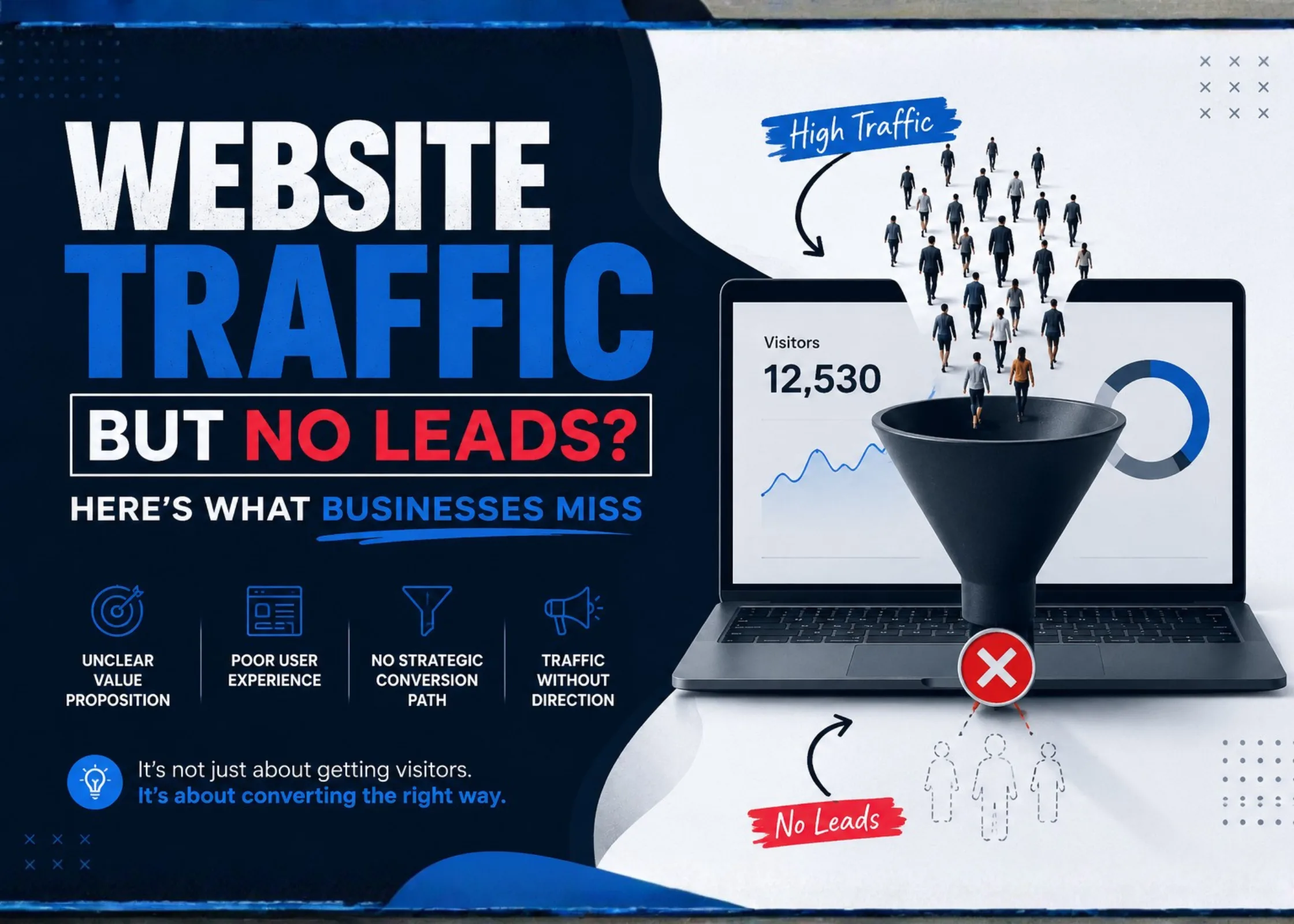
You’re getting website traffic.
People are landing on your pages, your analytics show visitors coming in, and your marketing efforts seem to be working.
But there’s one problem.
Those visitors aren’t turning into inquiries, calls, demo requests, or customers.
If that sounds familiar, you’re not alone.
This is one of the most common challenges businesses face today. They invest time and budget into SEO, social media, paid ads, and content marketing only to realize traffic alone isn’t driving growth.
Because here’s the truth:
More traffic doesn’t automatically mean more leads.
In many cases, the issue isn’t visibility it’s conversion.
If your website is attracting attention but not generating business opportunities, there’s usually something happening after people arrive.
Let’s look at what businesses often miss, and that’s how to fix it.
Traffic Is Only the First Step
Website traffic is often treated as the ultimate marketing metric.
But traffic simply tells you people visited.
It doesn’t tell you whether they understood your offer, trusted your brand, or knew what to do next.
Think about it this way.
If 10,000 people walk into a store and nobody buys anything, the problem isn’t footfall—it’s the experience inside.
Your website works the same way.
Lead generation happens when the right audience arrives and is guided toward meaningful action.
That’s why businesses should focus less on visitor volume and more on:
- Conversion rate
- Lead quality
- Engagement
- User behavior
- Customer journey performance
A high-performing website doesn’t just attract visitors—it converts them.
1. You’re Bringing in Visitors, Not Buyers
Not all traffic has business value.
A website can rank well, get clicks, and still fail to generate leads if the people arriving were never likely to convert.
This often happens when businesses focus too heavily on reach instead of relevance.
For example:
- Creating content that attracts broad audiences
- Running campaigns without audience intent
- Targeting high-volume keywords with low buying potential
- Publishing content disconnected from services
People may engage with your content and leave because they found information—not a reason to take action.
What to Do Instead
Start by understanding intent.
Ask yourself:
- Who is coming to my website?
- What are they trying to achieve?
- Does my content solve that specific problem?
Build content around the customer journey.
Some visitors want education.
Others are comparing solutions.
Some are ready to buy.
Your website should support all three stages.
The goal isn’t more traffic.
The goal is better traffic.
2. Your Website Isn’t Explaining Value Fast Enough
Visitors don’t spend time trying to figure out what a business does.
If your message isn’t clear quickly, people leave.
Many websites accidentally focus too much on themselves:
“We are innovative.”
“We are experts.”
“We provide excellence.”
But visitors are thinking something else:
“How does this help me?”
Within seconds, users should understand:
- What you offer
- Who it helps
- Why it matters
- What they should do next
Improve Your Website Messaging
Instead of writing:
“Delivering Exceptional Marketing Solutions.”
Try:
“Generate More Qualified Leads Through Smarter Digital Marketing.”
Notice the difference?
One describes the company.
The other explains the outcome.
Clear messaging builds trust faster than complicated language ever will.
3. Your Website Experience May Be Creating Friction
Even interested visitors leave when a website feels difficult to use.
People expect speed, clarity, and convenience.
If they encounter friction, they move on.
Common conversion blockers include:
- Slow loading pages
- Confusing navigation
- Mobile issues
- Too many choices
- Long paths to contact
Visitors shouldn’t have to search for information.
Good websites remove effort.
Quick Improvements That Matter
- Simplify navigation
- Improve loading speed
- Make important pages easier to find
- Reduce unnecessary content
- Make forms easier to complete
Every extra click reduces the chance of conversion.
4. Your Calls-to-Action Aren’t Strong Enough
One overlooked reason businesses lose leads:
They never clearly ask for them.
A visitor might be interested but uncertainty creates hesitation.
Generic buttons like:
- Learn More
- Submit
- Contact Us
don’t create momentum.
Strong CTAs tell people exactly what they gain.
Examples:
- Book Your Free Consultation
- Get a Website Performance Audit
- Download the Free Guide
- Talk to Our Team
- Request a Strategy Session
Your CTA shouldn’t feel like a command.
It should feel like the next logical step.
And every page should have one clear action.
5. You’re Missing Opportunities to Capture Leads
Most people don’t convert on their first visit.
That means your website needs a system—not hope.
If visitors leave without taking action, you lose future opportunities.
A few common mistakes:
- Asking for too much information
- Long contact forms
- No downloadable resources
- No follow-up mechanism
Create More Entry Points
Make it easier for visitors to connect.
Try:
Simple forms
Ask only what’s necessary.
Lead magnets
Offer something genuinely useful.
Examples:
- Guides
- Templates
- Checklists
- Free audits
Landing pages
Reduce distractions and focus on one goal.
Small changes can increase conversions significantly.
6. Visitors Don’t Trust You Yet
People rarely become leads because they’re convinced.
They become leads because they feel confident enough to continue.
Trust is often the missing piece.
Ask yourself:
Would someone trust your business after spending two minutes on your website?
If the answer isn’t obvious, improvement is needed.
Build credibility with:
- Customer testimonials
- Case studies
- Reviews
- Results and outcomes
- Client logos
- Team expertise
Don’t just tell visitors you’re good.
Show them.
Trust reduces hesitation.
7. You’re Tracking Traffic Instead of Business Outcomes
Traffic is easy to celebrate.
Conversions are what matter.
If your reports stop at page views and impressions, you’re missing the bigger picture.
Start measuring metrics connected to growth:
- Conversion rate
- Form submissions
- Bounce rate
- Session duration
- Cost per lead
- Exit points
Then ask:
Where are people dropping off?
What pages convert?
Which channels bring qualified visitors?
Data doesn’t just explain performance—it shows where growth opportunities exist.
How to Turn Traffic Into Leads
If your website gets attention but not results, start here:
- Attract the right audience
- Improve your messaging
- Reduce friction across the website
- Strengthen calls-to-action
- Create more lead capture opportunities
- Build trust
- Optimize continuously
You don’t always need more traffic.
Sometimes you simply need your website to work harder.
Final Thoughts
Getting traffic feels exciting.
But traffic without conversions can create the illusion of growth.
The businesses that generate consistent leads aren’t always the ones attracting the most visitors.
They’re the ones creating experiences that guide people from interest to action.
Before increasing your ad spend or publishing more content, take a closer look at what happens once visitors arrive.
Because often, the biggest growth opportunity isn’t getting more people to your website.
It’s converting more of the people who are already there.
Getting traffic but not leads? It may be time to audit your website experience and uncover what’s stopping visitors from becoming customers